The Five Most Important Speeches During the Ratification Debates
Throughout the debate over ratifying the newly proposed Constitution of 1787, thousands of speeches were given in a variety of forums. Speeches were delivered in the Constitutional Convention, the Confederation Congress, legislative assemblies (by governors and legislators), state ratifying conventions, public meetings, debating societies, and even in churches. In some cases, notes of speeches survive that were taken by people in the audience, by shorthand note takers bent on their publication, and occasionally even by the orator himself. Many speeches were recorded in newspapers and pamphlets. The impact of most of these speeches is difficult to determine. However, the five speeches printed below had not only an immediate impact but subsequently a much broader impact on the national ratification debate.
 On the last day of the Constitutional Convention, an aged and infirmed Benjamin Franklin asked his Pennsylvania colleague James Wilson to deliver a speech for him in which the Convention delegates were encouraged to dismiss any specific objections to the Constitution and vote to approve the new form of government for the good of the entire country. Perhaps Franklin’s plea successfully changed the opinion of a couple delegates, but three delegates (Elbridge Gerry of Massachusetts and George Mason and Edmund Randolph of Virginia) rejected Franklin’s request and refused to sign the Constitution on the last day of the Convention. Subsequently, two delegates—Nathaniel Gorham of Massachusetts and Daniel Carroll of Maryland—asked Franklin for a copy of the speech which they then had printed in newspapers, which then generated reprintings in almost forty other newspapers throughout the country. Also see an earlier blog from our website: “Jump-Starting Ratification: Franklin’s Last Speech in the Constitutional Convention.”
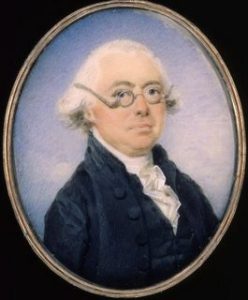 James Wilson of Pennsylvania was one of the most important delegates in the Constitutional Convention. On the evening of 6 October 1787 he addressed a large gathering in the courtyard of the Pennsylvania State House assembled to nominate Philadelphia assemblymen for the upcoming state elections. Wilson’s speech was the first public address by a Constitutional Convention delegate explaining and defending the newly proposed Constitution. The speech answered several Antifederalist objections to the Constitution some of which had just appeared the previous day in the first address signed by “Centinel.” Most significantly, Wilson defended the Constitution’s lack of a bill of rights by distinguishing between state and federal constitutions. He argued that when state constitutions were formed, they created state governments that possessed all powers except those that the constitution specifically prohibited; but in forming a federal constitution, all powers not specifically given to the federal government were reserved to the states. This reserved powers theory became a Federalist lynchpin. Wilson’s speech was printed in a special edition of the Pennsylvania Herald on 9 October and was reprinted in almost forty newspapers, in the Philadelphia American Museum (a monthly magazine with national circulation), in broadsides, and in pamphlets. The reserved powers theory was widely supported and condemned. Also see an earlier blog from our website: “Single Most Important Speech in the Debate over Ratifying the Constitution.”
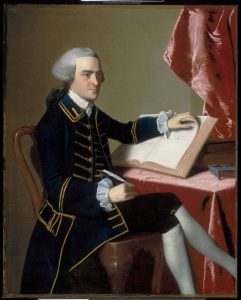 John Hancock, the popular governor of Massachusetts, did not take a public stance on the Constitution before the commencement of the election of Convention delegates in mid-December 1787. Despite his detachment, Hancock was easily elected as a delegate to the state ratifying Convention that convened on 9 January 1788. The Convention delegates, seemingly evenly divided between Federalists and Antifederalists, readily elected Hancock as the Convention’s president even though he was unable to attend the sessions due to a recurring bout with the gout. While the outcome remained uncertain, Hancock’s gout persisted, a condition that often plagued Hancock at politically opportune times.
After three weeks of debate, Convention Federalists realized that a slim majority was leaning against the Constitution. If the Massachusetts Convention rejected the Constitution, it seemed unlikely that the nine-state threshold for ratification would be achieved. Consequently, a Federalist committee formulated an ingenious political strategy. They approached the ailing governor (who was not politically aligned with them) with a deal. If he would attend the Convention and submit a list of amendments to the Constitution as recommendations, they would support him for re-election as governor in the spring gubernatorial election. Hancock should tell the delegates that he personally drafted the amendments even though they were secretly written by the Federalist committee. If the Constitution was ratified, they promised to support Hancock as vice president to serve with George Washington, who was the country’s overwhelming choice to be the first president. But, if Virginia did not ratify, making Washington ineligible to be president, Hancock would be their candidate to fill the position. Hancock accepted the deal and was carried into the Convention on a litter on 30 January. The next day he delivered a proposal calling for ratification of the Constitution which would be accompanied by nine recommendatory amendments. Samuel Adams immediately seconded Hancock’s “conciliatory proposition” and the delegates voted by a slim majority of nineteen (187-168) to adopt the Constitution on 6 February.
Hancock was vilified by Antifederalist who accused him of being “the ostensible Puppet” of their opponents, but was widely praised for his proposal that saved the Constitution. According to one Federalist, “Gouverour Hancock has gained himself immortal Honor, in his conduct on this occasion—it is certain if he had not taken an active—indeed a very active part in favor of the adoption, we never should have gained a vote in favor of it—all the first & leading Characters in the Towns & State have pledg’d themselves to him, to support him to the utmost [of] their power, & ability—for he has acted a most noble part in this business—& he never stood so high with the people as now.” Six of the remaining seven states followed the example of adopting the Constitution with recommendatory amendments. Without the Massachusetts procedure, it is doubtful that the Constitution would have been adopted in its unamended form.
John Hancock, the popular governor of Massachusetts, did not take a public stance on the Constitution before the commencement of the election of Convention delegates in mid-December 1787. Despite his detachment, Hancock was easily elected as a delegate to the state ratifying Convention that convened on 9 January 1788. The Convention delegates, seemingly evenly divided between Federalists and Antifederalists, readily elected Hancock as the Convention’s president even though he was unable to attend the sessions due to a recurring bout with the gout. While the outcome remained uncertain, Hancock’s gout persisted, a condition that often plagued Hancock at politically opportune times.
After three weeks of debate, Convention Federalists realized that a slim majority was leaning against the Constitution. If the Massachusetts Convention rejected the Constitution, it seemed unlikely that the nine-state threshold for ratification would be achieved. Consequently, a Federalist committee formulated an ingenious political strategy. They approached the ailing governor (who was not politically aligned with them) with a deal. If he would attend the Convention and submit a list of amendments to the Constitution as recommendations, they would support him for re-election as governor in the spring gubernatorial election. Hancock should tell the delegates that he personally drafted the amendments even though they were secretly written by the Federalist committee. If the Constitution was ratified, they promised to support Hancock as vice president to serve with George Washington, who was the country’s overwhelming choice to be the first president. But, if Virginia did not ratify, making Washington ineligible to be president, Hancock would be their candidate to fill the position. Hancock accepted the deal and was carried into the Convention on a litter on 30 January. The next day he delivered a proposal calling for ratification of the Constitution which would be accompanied by nine recommendatory amendments. Samuel Adams immediately seconded Hancock’s “conciliatory proposition” and the delegates voted by a slim majority of nineteen (187-168) to adopt the Constitution on 6 February.
Hancock was vilified by Antifederalist who accused him of being “the ostensible Puppet” of their opponents, but was widely praised for his proposal that saved the Constitution. According to one Federalist, “Gouverour Hancock has gained himself immortal Honor, in his conduct on this occasion—it is certain if he had not taken an active—indeed a very active part in favor of the adoption, we never should have gained a vote in favor of it—all the first & leading Characters in the Towns & State have pledg’d themselves to him, to support him to the utmost [of] their power, & ability—for he has acted a most noble part in this business—& he never stood so high with the people as now.” Six of the remaining seven states followed the example of adopting the Constitution with recommendatory amendments. Without the Massachusetts procedure, it is doubtful that the Constitution would have been adopted in its unamended form.
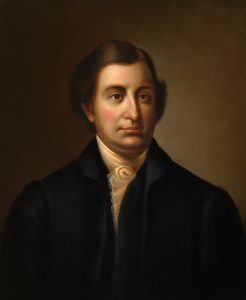 Edmund Randolph was the popular governor of Virginia. He attended the Constitutional Convention as a staunch advocate for a strengthened central government, and, in fact, presented the Virginia Plan on the first day of debate in the Convention on 29 May 1787. But, by the end of the Convention, Randolph had doubts about the new Constitution. In his judgment it needed amendments that included a bill of rights. He wanted the state ratifying conventions to submit amendments to the Confederation Congress that would then be considered in a second constitutional convention whose actions on each amendment would be final. When his fellow delegates rejected the idea of a second convention, Randolph refused to sign the Constitution on the last day of the Convention saying, however, that “he did not mean by this refusal to decide that he should oppose the Constitution without doors. He meant only to keep himself free to be governed by his duty as it should be prescribed by his future judgment.”
Randolph’s refusal to sign the Constitution lost him some support among Virginia Federalists while gaining support among Antifederalists. The state legislature, however, re-elected him governor on 23 October. On 2 December 1787, four members of the Virginia House of Delegates asked Randolph to submit his reasons for not signing the Constitution. He responded explaining his actions in a letter that he said he had begun to write on 10 October. Near the end of the letter, Randolph indicated his commitment to the Union: “I shall therefore cling to the union, as the rock of our salvation, and urge Virginia to finish the salutary work, which she has begun. And if after our best efforts for amendments cannot be obtained, I scruple not to declare, (notwithstanding the advantage, which such a declaration may give to the enemies of my proposal), that I will, as an individual citizen, accept the constitution; because I would regulate myself by the spirit of America.”
The letter was published as a pamphlet in late December 1787. Within three months, it was widely reprinted in newspapers, in the nationally-circulated American Museum, and in an Antifederalist pamphlet anthology that omitted the statement about his adherence to the Union. This omission was denounced as an example of Antifederalist chicanery.
Randolph was elected to the Virginia ratifying Convention, which was thought to be fairly evenly divided. Much attention focused on Randolph as he made his first speech on 4 June in which he surprised many by endorsing the Constitution. With this stance, Randolph carried with him enough fellow delegates to obtain a ten-vote majority in favor of ratification (89-79). Antifederalists were livid in condemning the traitorous Randolph as a “young Arnold.” One observer noted that “you cannot conceive how the Anti party, reprobate, curse, & abuse, this Man.” Without Randolph’s endorsement, it is unlikely that Virginia would have ratified without required amendments—a position that would have strengthened New York Antifederalists in demanding amendments before they ratified the Constitution, thus provoking a political crisis.
Edmund Randolph was the popular governor of Virginia. He attended the Constitutional Convention as a staunch advocate for a strengthened central government, and, in fact, presented the Virginia Plan on the first day of debate in the Convention on 29 May 1787. But, by the end of the Convention, Randolph had doubts about the new Constitution. In his judgment it needed amendments that included a bill of rights. He wanted the state ratifying conventions to submit amendments to the Confederation Congress that would then be considered in a second constitutional convention whose actions on each amendment would be final. When his fellow delegates rejected the idea of a second convention, Randolph refused to sign the Constitution on the last day of the Convention saying, however, that “he did not mean by this refusal to decide that he should oppose the Constitution without doors. He meant only to keep himself free to be governed by his duty as it should be prescribed by his future judgment.”
Randolph’s refusal to sign the Constitution lost him some support among Virginia Federalists while gaining support among Antifederalists. The state legislature, however, re-elected him governor on 23 October. On 2 December 1787, four members of the Virginia House of Delegates asked Randolph to submit his reasons for not signing the Constitution. He responded explaining his actions in a letter that he said he had begun to write on 10 October. Near the end of the letter, Randolph indicated his commitment to the Union: “I shall therefore cling to the union, as the rock of our salvation, and urge Virginia to finish the salutary work, which she has begun. And if after our best efforts for amendments cannot be obtained, I scruple not to declare, (notwithstanding the advantage, which such a declaration may give to the enemies of my proposal), that I will, as an individual citizen, accept the constitution; because I would regulate myself by the spirit of America.”
The letter was published as a pamphlet in late December 1787. Within three months, it was widely reprinted in newspapers, in the nationally-circulated American Museum, and in an Antifederalist pamphlet anthology that omitted the statement about his adherence to the Union. This omission was denounced as an example of Antifederalist chicanery.
Randolph was elected to the Virginia ratifying Convention, which was thought to be fairly evenly divided. Much attention focused on Randolph as he made his first speech on 4 June in which he surprised many by endorsing the Constitution. With this stance, Randolph carried with him enough fellow delegates to obtain a ten-vote majority in favor of ratification (89-79). Antifederalists were livid in condemning the traitorous Randolph as a “young Arnold.” One observer noted that “you cannot conceive how the Anti party, reprobate, curse, & abuse, this Man.” Without Randolph’s endorsement, it is unlikely that Virginia would have ratified without required amendments—a position that would have strengthened New York Antifederalists in demanding amendments before they ratified the Constitution, thus provoking a political crisis.
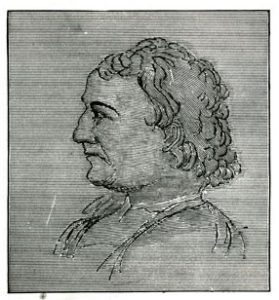 Melancton Smith was raised in Dutchess County, New York, where he was a prominent merchant who at different times served as the county sheriff, a justice of the peace, and a judge on the court of common pleas. He moved to New York City in 1784 where he was one of Governor George Clinton’s most trusted lieutenants and was a founding member of the New York manumission society in 1785. He served in the Confederation Congress in 1785-1787, in which he delivered a speech in July 1786 criticizing Congress’ rejection of New York’s ratification of the Impost of 1783 because of several unacceptable provisos. He expanded the speech in two pamphlets published in October 1786 under the pseudonym “A Republican.”
In 1787, Smith strongly opposed the new Constitution because he feared that it endangered the rights of the people and the sovereignty of the states. With no chance of being elected to the state ratifying convention from strongly-Federalist New York City, Smith was elected to the convention from Dutchess County, which was expected to elect all Antifederalists as its seven delegates. Statewide, Antifederalists won a landslide victory capturing more than two-thirds of the Convention seats. Smith led Convention Antifederalists against the Federalist onslaught led by Alexander Hamilton and John Jay. In fact, Smith characterized himself as the manager of the Convention, which assembled in Poughkeepsie on 17 June 1788.
Knowing that they had no chance to ratify the Constitution, Convention Federalists delayed a final vote hoping for the arrival of favorable news from New Hampshire and Virginia where their conventions also convened in June 1788. Antifederalists steadfastly refused to ratify without conditional amendments. Federalists denounced such a conditional ratification equating it to a rejection that would oust New York from the Union. News of New Hampshire’s ratification on 21 June that satisfied the constitutional-threshold of nine state ratifications did little to quell Antifederalists who sensed that the new government could not succeed without Virginia and New York. Everything changed, however, when news arrived on 2 July that Virginia had ratified. Federalists took heart, while the previously united Antifederalists now fractured as they frantically considered and proposed a variety of strategies all aimed at a limited ratification with conditional amendments or a limited term ratification allowing time for a second constitutional convention to meet and adopt amendments.
Finally, a small core of Antifederalist leaders that probably included Governor Clinton (who was the Convention’s president), Samuel Jones, and Melancton Smith decided that disunion was too dangerous for both the country and for New York. On 23 July Smith gave a speech that announced a change in his position. Instead of supporting ratification of the Constitution only if accompanied by conditional amendments, Smith announced that Antifederalists should ratify with recommendatory amendments that should be obtained through the procedure provided in Article V of the Constitution. Despite this change, Smith contended that “he was consistent in his principles and conduct” in pursuing “his important and favourite object of amendments with equal zeal as before, but in a practicable way which was only in the mode prescribed by the Constitution.” In announcing this change, Smith said that he followed “equally the dictate of reason and of duty to quit his first ground, and advance so far as that they might be received into the Union.” Smith’s efforts succeeded in obtaining a three-vote majority (30-27) as eleven Antifederalists either did not vote or voted to ratify, including five of the seven Dutchess County delegates.
When news of New York’s ratification was received in New York City, Federalist merchant Seth Johnson believed that “much praise is due M Smith, he found the improbability of having amendments made by the states previous to its becoming a government, & gave up his opinion to what he thought necessary for the tranquillity & advantage of the state. I do not think that he is any more convinced than when he left town. his conduct has been displeasing to many of the anti’s—his moderation & the abilities he has shown in convention has in some degree compensated with the federalists for his opposition.” Henry Knox, serving as the Confederation’s Secretary at War, reported to George Washington that the New York Antifederalist Convention delegates should be praised “for their candor and wisdom in assuming different conduct when it became apparent that a perseverance in opposition would most probably terminate in Civil War, for such and nothing short of it were the prospects.”
The manuscript of Smith’s speech has only been recently discovered in the New York State Library’s Manuscripts and Special Collections in the Papers of John Williams (Box 8, folder 30). In the process of mounting the manuscript pages in a book many years ago, folds were made that obscured the final lines of some of the pages. Additionally, at least three of the pages were incorrectly arranged. The manuscript, which appears to be a draft of the speech, does not appear to be in the handwriting of either Melancton Smith or John Williams. (The manuscript of another undated speech delivered by Melancton Smith on 11 July 1788 has also been located in the John Williams Papers of the New York State Library. In this much shorter speech, Smith reiterates his initial position that the New York Convention should only ratify the Constitution with conditional amendments, despite the fact that Virginia has ratified unconditionally.)
A summary of Smith’s 23 July speech was included in a folio-sized broadside printed by John and Archibald M’Lean as a “Supplement Extraordinary” to the New York Independent Journal, 28 July 1788 under the sub-heading “Copy of a Letter from Poughkeepsie, dated Friday, July 25, 1788” (Evans 21172). At the end of the printed 25 July letter from Poughkeepsie, the letter writer stated: “I have been rather particular in stating the business of Wednesday to you, because I think it is of a decisive nature; and I was so well pleased with Smith’s speech, that I have given you the substance of it with fidelity, and nearly as I could in his own language.” The copy of the letter was reprinted in twenty-five newspapers by 14 August: N.H. (1), Mass. (4), R.I. (2), Conn. (5), N.Y. (5), Pa. (4), Md. (1), Va. (2), S.C. (1).
Smith’s speech significantly impacted his subsequent career. His moderation did not endear him to Federalists, while many Antifederalists viewed him as traitorous. Although he continued in George Clinton’s inner circle, Smith was not chosen as one of New York’s first U.S. senators and, in fact, was never elected to a federal position under the Constitution. In essence, his effort to keep New York in the Union while continuing the effort to amend the Constitution stifled his political career. According to Robin Brooks, Smith’s biographer, “Even though much of Melancton Smith’s life lies in obscurity, for a few days in July, 1788, he came as near as any man ever does to holding the fate of the nascent American nation in his hands. When he broke with most of his friends and political allies to support ratification of the Federal Constitution, he ensured New York’s adherence to the new Union and averted possible civil war, at the cost of his own political career.”
Melancton Smith was raised in Dutchess County, New York, where he was a prominent merchant who at different times served as the county sheriff, a justice of the peace, and a judge on the court of common pleas. He moved to New York City in 1784 where he was one of Governor George Clinton’s most trusted lieutenants and was a founding member of the New York manumission society in 1785. He served in the Confederation Congress in 1785-1787, in which he delivered a speech in July 1786 criticizing Congress’ rejection of New York’s ratification of the Impost of 1783 because of several unacceptable provisos. He expanded the speech in two pamphlets published in October 1786 under the pseudonym “A Republican.”
In 1787, Smith strongly opposed the new Constitution because he feared that it endangered the rights of the people and the sovereignty of the states. With no chance of being elected to the state ratifying convention from strongly-Federalist New York City, Smith was elected to the convention from Dutchess County, which was expected to elect all Antifederalists as its seven delegates. Statewide, Antifederalists won a landslide victory capturing more than two-thirds of the Convention seats. Smith led Convention Antifederalists against the Federalist onslaught led by Alexander Hamilton and John Jay. In fact, Smith characterized himself as the manager of the Convention, which assembled in Poughkeepsie on 17 June 1788.
Knowing that they had no chance to ratify the Constitution, Convention Federalists delayed a final vote hoping for the arrival of favorable news from New Hampshire and Virginia where their conventions also convened in June 1788. Antifederalists steadfastly refused to ratify without conditional amendments. Federalists denounced such a conditional ratification equating it to a rejection that would oust New York from the Union. News of New Hampshire’s ratification on 21 June that satisfied the constitutional-threshold of nine state ratifications did little to quell Antifederalists who sensed that the new government could not succeed without Virginia and New York. Everything changed, however, when news arrived on 2 July that Virginia had ratified. Federalists took heart, while the previously united Antifederalists now fractured as they frantically considered and proposed a variety of strategies all aimed at a limited ratification with conditional amendments or a limited term ratification allowing time for a second constitutional convention to meet and adopt amendments.
Finally, a small core of Antifederalist leaders that probably included Governor Clinton (who was the Convention’s president), Samuel Jones, and Melancton Smith decided that disunion was too dangerous for both the country and for New York. On 23 July Smith gave a speech that announced a change in his position. Instead of supporting ratification of the Constitution only if accompanied by conditional amendments, Smith announced that Antifederalists should ratify with recommendatory amendments that should be obtained through the procedure provided in Article V of the Constitution. Despite this change, Smith contended that “he was consistent in his principles and conduct” in pursuing “his important and favourite object of amendments with equal zeal as before, but in a practicable way which was only in the mode prescribed by the Constitution.” In announcing this change, Smith said that he followed “equally the dictate of reason and of duty to quit his first ground, and advance so far as that they might be received into the Union.” Smith’s efforts succeeded in obtaining a three-vote majority (30-27) as eleven Antifederalists either did not vote or voted to ratify, including five of the seven Dutchess County delegates.
When news of New York’s ratification was received in New York City, Federalist merchant Seth Johnson believed that “much praise is due M Smith, he found the improbability of having amendments made by the states previous to its becoming a government, & gave up his opinion to what he thought necessary for the tranquillity & advantage of the state. I do not think that he is any more convinced than when he left town. his conduct has been displeasing to many of the anti’s—his moderation & the abilities he has shown in convention has in some degree compensated with the federalists for his opposition.” Henry Knox, serving as the Confederation’s Secretary at War, reported to George Washington that the New York Antifederalist Convention delegates should be praised “for their candor and wisdom in assuming different conduct when it became apparent that a perseverance in opposition would most probably terminate in Civil War, for such and nothing short of it were the prospects.”
The manuscript of Smith’s speech has only been recently discovered in the New York State Library’s Manuscripts and Special Collections in the Papers of John Williams (Box 8, folder 30). In the process of mounting the manuscript pages in a book many years ago, folds were made that obscured the final lines of some of the pages. Additionally, at least three of the pages were incorrectly arranged. The manuscript, which appears to be a draft of the speech, does not appear to be in the handwriting of either Melancton Smith or John Williams. (The manuscript of another undated speech delivered by Melancton Smith on 11 July 1788 has also been located in the John Williams Papers of the New York State Library. In this much shorter speech, Smith reiterates his initial position that the New York Convention should only ratify the Constitution with conditional amendments, despite the fact that Virginia has ratified unconditionally.)
A summary of Smith’s 23 July speech was included in a folio-sized broadside printed by John and Archibald M’Lean as a “Supplement Extraordinary” to the New York Independent Journal, 28 July 1788 under the sub-heading “Copy of a Letter from Poughkeepsie, dated Friday, July 25, 1788” (Evans 21172). At the end of the printed 25 July letter from Poughkeepsie, the letter writer stated: “I have been rather particular in stating the business of Wednesday to you, because I think it is of a decisive nature; and I was so well pleased with Smith’s speech, that I have given you the substance of it with fidelity, and nearly as I could in his own language.” The copy of the letter was reprinted in twenty-five newspapers by 14 August: N.H. (1), Mass. (4), R.I. (2), Conn. (5), N.Y. (5), Pa. (4), Md. (1), Va. (2), S.C. (1).
Smith’s speech significantly impacted his subsequent career. His moderation did not endear him to Federalists, while many Antifederalists viewed him as traitorous. Although he continued in George Clinton’s inner circle, Smith was not chosen as one of New York’s first U.S. senators and, in fact, was never elected to a federal position under the Constitution. In essence, his effort to keep New York in the Union while continuing the effort to amend the Constitution stifled his political career. According to Robin Brooks, Smith’s biographer, “Even though much of Melancton Smith’s life lies in obscurity, for a few days in July, 1788, he came as near as any man ever does to holding the fate of the nascent American nation in his hands. When he broke with most of his friends and political allies to support ratification of the Federal Constitution, he ensured New York’s adherence to the new Union and averted possible civil war, at the cost of his own political career.”
Benjamin Franklin’s last speech in the Constitutional Convention
Monday, 17 September 1787
Benjamin Franklin
James Wilson’s Speech in the Pennsylvania State House Yard
Saturday, 6 October 1787
James Wilson
John Hancock’s Speech in the Massachusetts Convention
Thursday afternoon, 31 January 1788
John Hancock
Edmund Randolph’s Speech in the Virginia Convention
Wednesday, 4 June 1788
Edmund Randolph
Melancton Smith’s Speech in the New York Convention
Wednesday, 23 July 1788
Melancton Smith