Deism and The Founders
During the Revolutionary and Founding eras many Americans increasingly abandoned traditional Christianity, embracing beliefs that could be described as either Unitarian or Deist. Many of these converts publicly maintained their original religious affiliations, attempting to avoid the harsh censures that prominent deists like Thomas Paine, Benjamin Franklin, and Thomas Jefferson regularly received. Deists rejected the belief in the divinity of Jesus, the doctrine of the Trinity, any notion of predestination, the Bible as the divinely inspired word of God, and state-sponsored religion. Instead, they believed in one God, who was a benevolent initiator of all events. For them, the word of God was not to be found in the Bible, but in nature and the Creation. While they regarded Jesus as a historical figure whose morality and teachings were praiseworthy and should be followed, they believed that Christian clergy and priests of other religions had perverted the true religion. Deists believed that the way to God was open to all, and a direct relationship could exist between man and God without the assistance of clergy, Jesus or the state. They emphasized the importance of living a moral life and following the dictates of one’s own conscience. Although uncertain about the nature of the hereafter, deists believed in a life after death.
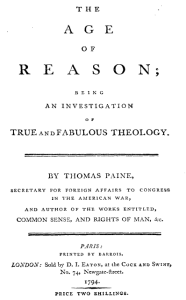 The core tenets of deism were perhaps best expressed by Thomas Paine in his two-volume Age of Reason, published in 1794 and 1795. By deism, “the only true religion,” Paine meant “the belief of one God, and an imitation of his moral character, or the practice of what are called moral virtues.” Accordingly, Paine wrote that, “The only idea man can affix to the name of God, is, that of a FIRST CAUSE, the cause of all things. And incomprehensibly difficult as it is for man to conceive what a first cause is, he arrives at the belief of it, from the tenfold greater difficulty of disbelieving it. It is difficult beyond description to conceive that space can have no end; but it is more difficult to conceive an end. It is difficult beyond the power of man to conceive an eternal duration of what we call time; but it is more impossible to conceive a time when there shall be no time. In like manner of reasoning, every thing we behold carries in itself the internal evidence that it did not make itself . . . and it is the conviction arising from this evidence, that carries us on, as it were, by necessity, to the belief of a first cause eternally existing, of a nature totally different to any material existence we know of, and by the power of which all things exist, and this first cause man calls God.”
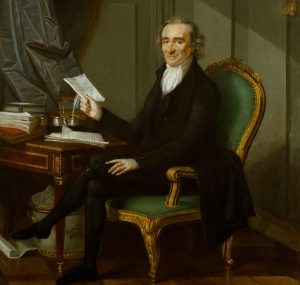 Thomas Paine was sharply critical of Christianity, going so far as to comparing it to “a species of atheism; a sort of religious denial of God.” In his view, Christianity “professes to believe in a man rather than in God. It is a compound made up chiefly of manism with but little deism. It introduces between man and his maker an opaque body which it calls a redeemer; as the moon introduces her opaque self between the earth and the sun, and it produces by this means a religious or an irreligious eclipse of light. It has put the whole orb of reason into shade. . . . The effect of this obscurity has been that of turning every thing upside down, and representing it in reverse; and among the revolutions it has thus magically produced, it has made a revolution in Theology.”
Paine also argued that what we now call natural philosophy, “embracing the whole circle of science” with astronomy at its pinnacle, is, in fact, the true theology. “It is the study of the works of God and of the power and wisdom of God in his works,” he wrote, “and is the true theology.” In contrast, Paine dismissed conventional theology as a distortion. “As to the theology that is now studied in its place, it is the study of human opinions and of human fancies concerning God,” he wrote. Rather, “it is not the study of God himself in the works that he has made, but in the works or writings that man has made; and it is not among the least of the mischiefs that the christian system has done to the world, that it has abandoned the original and beautiful system of theology, like a beautiful innocent to distress and reproach, to make room for the hag of superstition.”
According to Paine, “The only religion that has not been invented, and that has in it every evidence of divine originality, is pure and simple deism.” “The true deist has but one Deity; and his religion consists in contemplating the power, wisdom, and benignity of the Deity in his works, and in endeavoring to imitate him in every thing moral, scientifical, and mechanical.” Continuing his analysis of deism, Paine argued that “It is a duty incumbent on every true deist, that he vindicates the moral justice of God against the calumnies of the bible.” He felt that it was safer “that we stop ourselves at the plain, pure, and unmixed belief of one God, which is Deism, than that we commit ourselves on an ocean of improbable, irrational, indecent and contradictory tales” found in the Bible. Rather, “the creation is the deist’s bible. He insisted, “It is only in the Creation that all our ideas and conceptions of a word of God can unite.” “He there reads, in the hand writing of the Creator himself, the certainty of his existence, and the immutability of his power; and all other bibles and testaments are to him forgeries.” Through the creation, “no human invention can counterfeit or alter, that God speaketh universally to man.” For Paine, “The word of God cannot exist in any written or human language. The continually progressive change to which the meaning of words is subject, the want [i.e., lack] of an universal language which renders translations necessary, the errors to which translations are again subject, the mistakes of copyists and printers, together with the possibility of willful alteration, are of themselves evidences, that human language, whether in speech or in print, cannot be the vehicle of the word of God.”
Thomas Paine was sharply critical of Christianity, going so far as to comparing it to “a species of atheism; a sort of religious denial of God.” In his view, Christianity “professes to believe in a man rather than in God. It is a compound made up chiefly of manism with but little deism. It introduces between man and his maker an opaque body which it calls a redeemer; as the moon introduces her opaque self between the earth and the sun, and it produces by this means a religious or an irreligious eclipse of light. It has put the whole orb of reason into shade. . . . The effect of this obscurity has been that of turning every thing upside down, and representing it in reverse; and among the revolutions it has thus magically produced, it has made a revolution in Theology.”
Paine also argued that what we now call natural philosophy, “embracing the whole circle of science” with astronomy at its pinnacle, is, in fact, the true theology. “It is the study of the works of God and of the power and wisdom of God in his works,” he wrote, “and is the true theology.” In contrast, Paine dismissed conventional theology as a distortion. “As to the theology that is now studied in its place, it is the study of human opinions and of human fancies concerning God,” he wrote. Rather, “it is not the study of God himself in the works that he has made, but in the works or writings that man has made; and it is not among the least of the mischiefs that the christian system has done to the world, that it has abandoned the original and beautiful system of theology, like a beautiful innocent to distress and reproach, to make room for the hag of superstition.”
According to Paine, “The only religion that has not been invented, and that has in it every evidence of divine originality, is pure and simple deism.” “The true deist has but one Deity; and his religion consists in contemplating the power, wisdom, and benignity of the Deity in his works, and in endeavoring to imitate him in every thing moral, scientifical, and mechanical.” Continuing his analysis of deism, Paine argued that “It is a duty incumbent on every true deist, that he vindicates the moral justice of God against the calumnies of the bible.” He felt that it was safer “that we stop ourselves at the plain, pure, and unmixed belief of one God, which is Deism, than that we commit ourselves on an ocean of improbable, irrational, indecent and contradictory tales” found in the Bible. Rather, “the creation is the deist’s bible. He insisted, “It is only in the Creation that all our ideas and conceptions of a word of God can unite.” “He there reads, in the hand writing of the Creator himself, the certainty of his existence, and the immutability of his power; and all other bibles and testaments are to him forgeries.” Through the creation, “no human invention can counterfeit or alter, that God speaketh universally to man.” For Paine, “The word of God cannot exist in any written or human language. The continually progressive change to which the meaning of words is subject, the want [i.e., lack] of an universal language which renders translations necessary, the errors to which translations are again subject, the mistakes of copyists and printers, together with the possibility of willful alteration, are of themselves evidences, that human language, whether in speech or in print, cannot be the vehicle of the word of God.”
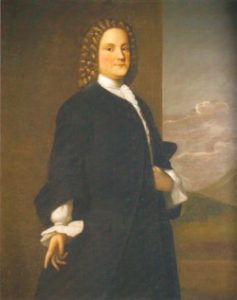 In his autobiography, Benjamin Franklin described how he was introduced to deism. “My parents had early given me religious impressions and brought me through my childhood piously in the Dissenting way,” he recalled. Around fifteen years old, while apprenticing in his brother James’s print shop in Boston, the young Franklin read some books refuting deism that “fell into my hands.” Ironically, the arguments of the deists that were quoted to be refuted appeared to Franklin “much stronger than the refutations.” Consequently, he “soon became a thorough Deist.” After moving to Philadelphia in 1723, Benjamin Franklin became a member of the city’s Presbyterian Church. Reflecting on his religious feelings in his autobiography, Franklin admitted that, although he “early absented myself from public assemblies of the sect, Sunday being my studying day, I never was without some religious principles. I never doubted, for instance, the existence of the Deity; that he made the world and governed it by his providence; that the most acceptable service of God was the doing good to man; that our souls are immortal; and that all crime will be punished and virtue rewarded, either here or hereafter. . . . Tho’ I seldom attended any public worship, I had still an opinion of its propriety, and of its utility when rightly conducted, and I regularly paid my annual subscription for the support of the only Presbyterian minister or meeting we had in Philadelphia.”
In his 1728 “Articles of Belief and Acts of Religion,” a personal manuscript manifesto, Franklin affirmed his belief in “one Supreme most perfect Being” who required “no worship or Praise from us” because he is “infinitely above it.” Still, Franklin acknowledged that there is, “something like a natural Principle which inclines [imperfect men] to Devotion or the Worship of some unseen power.” Consequently, Franklin thought it a “Duty, as a Man, to pay Divine Regards to Something.” Franklin believed that God “has given us Reason whereby we are capable of observing his Wisdom in the Creation, [and] he is not above caring for us, being pleased with our Praise, and offended when we slight him, or Neglect his glory.” Thinking that this divine Being was benevolent, Franklin felt “for many Reasons,” that he “should be happy to have so wise, good and powerful a Being my Friend.”
About a month before his death, Franklin wrote to Yale College president Ezra Stiles in early March 1790, giving him an account of his creed. “I believe in one God, creator of the universe,” he began. “That he governs it by his Providence. That he ought to be worshiped. That the most acceptable service we render to him is doing good to his other children. That the soul of man is immortal, and will be treated with justice in another life respecting its conduct in this.” “These,” he wrote, “I take to be the fundamental principles of all sound religion, and I regard them as you do in whatever sect I meet with them.”
In his autobiography, Benjamin Franklin described how he was introduced to deism. “My parents had early given me religious impressions and brought me through my childhood piously in the Dissenting way,” he recalled. Around fifteen years old, while apprenticing in his brother James’s print shop in Boston, the young Franklin read some books refuting deism that “fell into my hands.” Ironically, the arguments of the deists that were quoted to be refuted appeared to Franklin “much stronger than the refutations.” Consequently, he “soon became a thorough Deist.” After moving to Philadelphia in 1723, Benjamin Franklin became a member of the city’s Presbyterian Church. Reflecting on his religious feelings in his autobiography, Franklin admitted that, although he “early absented myself from public assemblies of the sect, Sunday being my studying day, I never was without some religious principles. I never doubted, for instance, the existence of the Deity; that he made the world and governed it by his providence; that the most acceptable service of God was the doing good to man; that our souls are immortal; and that all crime will be punished and virtue rewarded, either here or hereafter. . . . Tho’ I seldom attended any public worship, I had still an opinion of its propriety, and of its utility when rightly conducted, and I regularly paid my annual subscription for the support of the only Presbyterian minister or meeting we had in Philadelphia.”
In his 1728 “Articles of Belief and Acts of Religion,” a personal manuscript manifesto, Franklin affirmed his belief in “one Supreme most perfect Being” who required “no worship or Praise from us” because he is “infinitely above it.” Still, Franklin acknowledged that there is, “something like a natural Principle which inclines [imperfect men] to Devotion or the Worship of some unseen power.” Consequently, Franklin thought it a “Duty, as a Man, to pay Divine Regards to Something.” Franklin believed that God “has given us Reason whereby we are capable of observing his Wisdom in the Creation, [and] he is not above caring for us, being pleased with our Praise, and offended when we slight him, or Neglect his glory.” Thinking that this divine Being was benevolent, Franklin felt “for many Reasons,” that he “should be happy to have so wise, good and powerful a Being my Friend.”
About a month before his death, Franklin wrote to Yale College president Ezra Stiles in early March 1790, giving him an account of his creed. “I believe in one God, creator of the universe,” he began. “That he governs it by his Providence. That he ought to be worshiped. That the most acceptable service we render to him is doing good to his other children. That the soul of man is immortal, and will be treated with justice in another life respecting its conduct in this.” “These,” he wrote, “I take to be the fundamental principles of all sound religion, and I regard them as you do in whatever sect I meet with them.”
 As to Jesus, Franklin offered qualified praise and cautious skepticism to Stiles. He described “the system of morals, and his religion, as he left them to us,” as “the best the world ever saw, or is likely to see.” However, he added, “I apprehend it has received various corrupting changes, and I have, with most of the present dissenters in England some doubts as to his divinity.” Yet Franklin declined to take a firm stance: “tho’ it is a question I do not dogmatize upon, having never studied it, and think it needless to busy myself with it now, when I expect soon an opportunity of knowing the truth with less trouble.” Still, Franklin saw no harm in a belief in Jesus’ divinity if it led to moral conduct. “I see no harm, however, in its being believed, if that belief has the good consequence, as it probably has, of making his doctrines more respected and better observed; especially as I do not perceive that the Supreme takes it amiss, by distinguishing the unbelievers in his government of the world with any particular marks of his displeasure.”
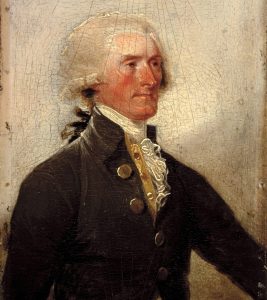 Thomas Jefferson also held many of the same deistic sentiments, although he was reluctant to divulge his beliefs which he considered “as a matter between every man and his maker, in which no other, & far less the public had a right to intermeddle.” As much as men might dispute “religious tenets,” Jefferson believed that “our reason at last must ultimately decide, as it is the only oracle which god has given us to determine between what really comes from him & the phantasms of a disordered or deluded imagination.” Jefferson felt no “uneasiness” in faithfully using the reason that God had given him. If he had erred, Jefferson “trust[ed] in him who made us what we are.” It wasn’t God’s “plan to make us always unerring. I must ever believe that religion substantially good which produces an honest life, and we have been authorized by one, whom you and I equally respect, to judge of the tree by its fruit.” Jefferson believed that we are saved not by “faith which is not within our power,” but “by our good works which are within our power.” He advised his eleven-year-old daughter Martha to always follow her conscience. “Our maker has given us all, this faithful internal Monitor, and if you always obey it, you will always be prepared for the end of the world: or for a much more certain event which is death. This must happen to all: it puts an end to the world as to us, & the way to be ready for it is never to do a wrong act.” To his young nephew Peter Carr, Jefferson wrote that “The moral sense, or conscience, is as much a part of man as his leg or arm. It is given to all human beings in a stronger or weaker degree, as force of members is given them in a greater or less degree. It may be strengthened by exercise, as may any particular limb of the body. This sense is submitted indeed in some degree to the guidance of reason; but it is a small stock which is required for this: even a less one than what we call Common sense. State a moral case to a ploughman & a professor. The former will decide it as well, & often better than the latter, because he has not been led astray by artificial rules.”
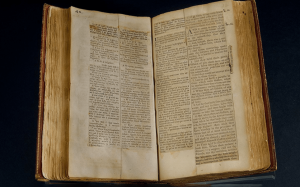
True to his deistic principles, Jefferson greatly admired Jesus, calling him “an extraordinary man” whose words stood out in the Bible as “diamonds from dunghills” that formed a doctrine that was eloquent but “within the comprehension of a child.” In fact, Jefferson put his admiration into play when he created what he called “a wee little book” that contained only the words of Jesus. He cut these words from the pages of the Bible “arranging them on the pages of a blank book in a certain order of time or subject. A more beautiful or precious morsel of ethics I have never seen. It is a document in proof that I am a real Christian, that is to say, a disciple of the doctrines of Jesus.” Popularly referred to today as “Jefferson’s Bible,” the 46-page collection was originally entitled The Life and Morals of Jesus of Nazareth. Jefferson described the “precepts of Jesus . . . to be the most pure, benevolent, and sublime which have ever been preached to man. I adhere to the principles of the first age; and consider all subsequent innovations as corruptions of his religion, having no foundation in what came from him.” Jefferson distilled Jesus’ doctrines into three simple provisions:
Thomas Jefferson also held many of the same deistic sentiments, although he was reluctant to divulge his beliefs which he considered “as a matter between every man and his maker, in which no other, & far less the public had a right to intermeddle.” As much as men might dispute “religious tenets,” Jefferson believed that “our reason at last must ultimately decide, as it is the only oracle which god has given us to determine between what really comes from him & the phantasms of a disordered or deluded imagination.” Jefferson felt no “uneasiness” in faithfully using the reason that God had given him. If he had erred, Jefferson “trust[ed] in him who made us what we are.” It wasn’t God’s “plan to make us always unerring. I must ever believe that religion substantially good which produces an honest life, and we have been authorized by one, whom you and I equally respect, to judge of the tree by its fruit.” Jefferson believed that we are saved not by “faith which is not within our power,” but “by our good works which are within our power.” He advised his eleven-year-old daughter Martha to always follow her conscience. “Our maker has given us all, this faithful internal Monitor, and if you always obey it, you will always be prepared for the end of the world: or for a much more certain event which is death. This must happen to all: it puts an end to the world as to us, & the way to be ready for it is never to do a wrong act.” To his young nephew Peter Carr, Jefferson wrote that “The moral sense, or conscience, is as much a part of man as his leg or arm. It is given to all human beings in a stronger or weaker degree, as force of members is given them in a greater or less degree. It may be strengthened by exercise, as may any particular limb of the body. This sense is submitted indeed in some degree to the guidance of reason; but it is a small stock which is required for this: even a less one than what we call Common sense. State a moral case to a ploughman & a professor. The former will decide it as well, & often better than the latter, because he has not been led astray by artificial rules.”
True to his deistic principles, Jefferson greatly admired Jesus, calling him “an extraordinary man” whose words stood out in the Bible as “diamonds from dunghills” that formed a doctrine that was eloquent but “within the comprehension of a child.” In fact, Jefferson put his admiration into play when he created what he called “a wee little book” that contained only the words of Jesus. He cut these words from the pages of the Bible “arranging them on the pages of a blank book in a certain order of time or subject. A more beautiful or precious morsel of ethics I have never seen. It is a document in proof that I am a real Christian, that is to say, a disciple of the doctrines of Jesus.” Popularly referred to today as “Jefferson’s Bible,” the 46-page collection was originally entitled The Life and Morals of Jesus of Nazareth. Jefferson described the “precepts of Jesus . . . to be the most pure, benevolent, and sublime which have ever been preached to man. I adhere to the principles of the first age; and consider all subsequent innovations as corruptions of his religion, having no foundation in what came from him.” Jefferson distilled Jesus’ doctrines into three simple provisions:
 (1) “That there is one only God, & he all perfect;
(2) that there is a future state of rewards & punishments; and
(3) that to love God with all thy heart & thy neighbor as thyself,” which all tended “to the happiness of man.”
(1) “That there is one only God, & he all perfect;
(2) that there is a future state of rewards & punishments; and
(3) that to love God with all thy heart & thy neighbor as thyself,” which all tended “to the happiness of man.”
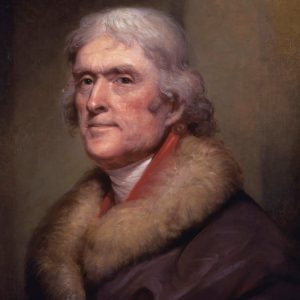 As an old man writing to John Adams, Jefferson saw the hand of the Creator in not only the enormity of the universe but also in the most minute earthly matter. He wrote, “The movements of the heavenly bodies, so exactly held in their course by the balance of centrifugal and centripetal forces, the structure of our earth itself, with its distribution of lands, waters and atmosphere, animal and vegetable bodies, examined in all their minutest particles, insects mere atoms of life, yet as perfectly organized as man or mammoth, the mineral substances, their generation and uses, it is impossible, I say, for the human mind not to believe that there is, in all this, design, cause, and effect, up to an ultimate cause, a fabricator of all things from matter and motion, their preserver and regulator while permitted to exist in their present forms, and their regenerator into new and other forms.”
Age of Reason title page
Thomas Paine
⨳⨳⨳⨳
Benjamin Franklin
Benjamin Franklin
⨳⨳⨳⨳
Thomas Jefferson
Thomas Jefferson’s bible
Thomas Jefferson
⨳⨳⨳⨳
Deists believed in an afterlife, though they had no clear understanding of what life after death would entail. Thomas Paine expressed little concern with “the manner of future existence, stating, “I content myself with believing, even to positive conviction, that the power that gave me existence is able to continue it, in any form and manner he pleases, either with or without this body; and it appears more probable to me that I shall continue to exist hereafter, than I should have had existence as I now have, before that existence began.” Although he had no choice in the matter, Paine hoped that “I had rather have a better body made a more convenient form, than the present.” Paine believed that God would use “His justice and goodness” in determining who would have entry to the afterworld. Although it would be presumptive for a mere mortal to suggest what the Creator will do with us hereafter, Paine felt that not every person should be admitted to an “eternal existence.” In Paine’s opinion, if it were up to him, those who had done good things to make his fellow-mortals happy should be happy hereafter, while those who were wicked should “meet with some punishment.” For those “who were neither good or bad were too insignificant for notice; [they] will be dropped entirely.” On a more hopeful note, Franklin thanked God for allowing him to prosper throughout his long life and he had “no doubt of its continuance in the next.” Jefferson was also uncertain about the hereafter. “The laws of nature have withheld from us the means of physical knowledge of the country of spirits and revelation has, for reasons unknown to us, chosen to leave us in the dark as we were.” Reflecting on his youth, he said, “When I was young I was fond of the speculations which seemed to promise some insight into that hidden country, but observing at length that they left me in the same ignorance in which they had found me, I have for very many years ceased to read or to think concerning them.” Instead, Jefferson embraced what he called “that pillow of ignorance which a benevolent creator has made so soft for us, knowing how much we should be forced to use it.” He concluded that it was “better by nourishing the good passions, & controlling the bad, to merit an inheritance in a state of being of which I can know so little, and to trust for the future to him who has been so good for the past.”