“Wallowing in the superfluity of liberty”: Agrarian Unrest and the Constitution
In 1787, about ninety percent of the population of the United States was engaged in agriculture. After the Revolution, many of these people, particularly those in the backcountry, struggled to pay their taxes and debts. Sheriffs seized private property and imprisoned debtors who failed to meet the demands of their creditors. Most states had insolvency laws that protected creditors’ rights, but none had bankruptcy laws that protected debtors’ rights. Petitions for relief flooded state legislatures. While most demands for relief came from small farmers, others were submitted by debt-ridden planters and from speculators in public securities and purchasers of confiscated Loyalist estates. Legislatures responded by lowering taxes, postponing their collection, or providing for their payment in farm produce. Several legislatures went further by interfering with private contracts by making produce or property legal tender, by delaying the collection of private debts, and by providing for payments in installments.
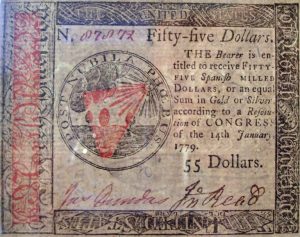 The traditional method of providing financial relief, dating back to colonial times, was to emit either bills of credit backed by anticipated tax revenues or loan office certificates given as loans to property holders backed by real estate mortgages. However, the wartime runaway inflation caused by the issuance of huge amounts of state and Continental paper money made many wary of future paper emissions. By the end of 1786, seven states had authorized emissions of bills of credit and/or loan office certificates. Occasionally made legal tender, this paper currency usually depreciated in value but was always accepted at par by the issuing state in payment for taxes. In turn, the states used the currency to pay for goods and services, to fund the interest and/or principal due on state and federal securities, and to make loans to individuals with sufficient real estate collateral.
Often, these relief measures failed to alleviate the full impact of the postwar depression. Consequently, debtors throughout the United States resorted to sporadic acts of violence. Tax collectors and sheriffs were often intimidated and sometimes beaten, foreclosure proceedings were disrupted, courts were closed, courthouses were burned, and imprisoned rioters were forcibly freed. On 20 September 1786 armed farmers surrounded the legislature in Exeter, New Hampshire, and demanded an emittance of paper money, the abolition of debts and taxes, and the equal distribution of property. The next day the mob was routed by the local militia. There were also isolated incidents or threats of violence in Connecticut, Pennsylvania, and South Carolina, while two courthouses were burned in Virginia. These acts of violence occurred both in the backcountry and in urban areas.
The most sustained violence occurred in Massachusetts. During the Revolution, the state government implemented a program of rigorous taxation and debt collection which continued after the war. In the spring of 1786 towns throughout the state petitioned for relief, but the legislature made only minor and temporary concessions. As a result, county conventions met in July and August in the eastern counties of Bristol and Middlesex and in the western counties of Worcester, Hampshire, and Berkshire. The conventions recommended several forms of debtor relief and proposed the drafting of a new state constitution.
The traditional method of providing financial relief, dating back to colonial times, was to emit either bills of credit backed by anticipated tax revenues or loan office certificates given as loans to property holders backed by real estate mortgages. However, the wartime runaway inflation caused by the issuance of huge amounts of state and Continental paper money made many wary of future paper emissions. By the end of 1786, seven states had authorized emissions of bills of credit and/or loan office certificates. Occasionally made legal tender, this paper currency usually depreciated in value but was always accepted at par by the issuing state in payment for taxes. In turn, the states used the currency to pay for goods and services, to fund the interest and/or principal due on state and federal securities, and to make loans to individuals with sufficient real estate collateral.
Often, these relief measures failed to alleviate the full impact of the postwar depression. Consequently, debtors throughout the United States resorted to sporadic acts of violence. Tax collectors and sheriffs were often intimidated and sometimes beaten, foreclosure proceedings were disrupted, courts were closed, courthouses were burned, and imprisoned rioters were forcibly freed. On 20 September 1786 armed farmers surrounded the legislature in Exeter, New Hampshire, and demanded an emittance of paper money, the abolition of debts and taxes, and the equal distribution of property. The next day the mob was routed by the local militia. There were also isolated incidents or threats of violence in Connecticut, Pennsylvania, and South Carolina, while two courthouses were burned in Virginia. These acts of violence occurred both in the backcountry and in urban areas.
The most sustained violence occurred in Massachusetts. During the Revolution, the state government implemented a program of rigorous taxation and debt collection which continued after the war. In the spring of 1786 towns throughout the state petitioned for relief, but the legislature made only minor and temporary concessions. As a result, county conventions met in July and August in the eastern counties of Bristol and Middlesex and in the western counties of Worcester, Hampshire, and Berkshire. The conventions recommended several forms of debtor relief and proposed the drafting of a new state constitution.
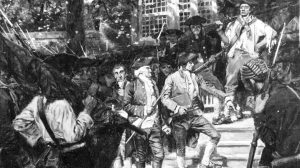 In late August and September 1786 distressed farmers joined together into armed groups called “Regulators” and closed the civil courts in several counties. The upheaval in Massachusetts became known as “Shays’s Rebellion,” although Shays was only one of several leaders, and a reluctant one at that. Moreover, Daniel Shays and most of the other leaders insisted that they wanted to obtain relief from the state, not to rebel against it. Finally, in January 1787 the state government moved to crush the rebellion. It mobilized the state militia and raised a privately financed army in the east under the command of General Benjamin Lincoln and in the west under General William Shepard. Both men advanced on Springfield (the site of a federal arsenal), where large concentrations of “Regulators” were stationed under the leadership of Daniel Shays, Luke Day, Eli Parsons, and Adam Wheeler. In late January Shepard’s militia killed several insurgents near Springfield. Lincoln’s forces soon joined him, and together they pursued and routed the remaining insurgents. Many “Regulator” leaders and their followers escaped across the state border.
After the rebellion was suppressed, the Massachusetts state government instituted a harsh policy of retribution against the insurgents. In February 1787, Governor James Bowdoin issued a proclamation offering a reward for the capture of rebel leaders. The legislature followed with a disqualifying act stripping the insurgents of some of their civil rights. By the end of April 1787, about a dozen of the uprising’s leaders had been condemned to death and hundreds of rebels had been arrested. Outraged by such harsh policies, the people of Massachusetts voted Bowdoin out of office and elected more sympathetic state legislators in April. Two months later the legislature repealed the disqualifying act and pardoned most of the insurgents. Governor John Hancock eventually pardoned everyone; no condemned leader was ever executed. As late as July 1787, small groups of fugitive “regulators” crossed the border and raided in Massachusetts, but they were never a major threat. Nevertheless, the specter of Shays still loomed in the public’s mind, and in May and June newspapers in and around Massachusetts were filled with rumors that Shays and his men were re-assemblying.
In the spring and summer of 1787, newspapers also reported three minor outbreaks of agrarian violence, one in Connecticut and two in Virginia. In each instance, the outbreak was quickly subdued and the leaders were arrested. One of the Virginia leaders was eventually hanged.
In late August and September 1786 distressed farmers joined together into armed groups called “Regulators” and closed the civil courts in several counties. The upheaval in Massachusetts became known as “Shays’s Rebellion,” although Shays was only one of several leaders, and a reluctant one at that. Moreover, Daniel Shays and most of the other leaders insisted that they wanted to obtain relief from the state, not to rebel against it. Finally, in January 1787 the state government moved to crush the rebellion. It mobilized the state militia and raised a privately financed army in the east under the command of General Benjamin Lincoln and in the west under General William Shepard. Both men advanced on Springfield (the site of a federal arsenal), where large concentrations of “Regulators” were stationed under the leadership of Daniel Shays, Luke Day, Eli Parsons, and Adam Wheeler. In late January Shepard’s militia killed several insurgents near Springfield. Lincoln’s forces soon joined him, and together they pursued and routed the remaining insurgents. Many “Regulator” leaders and their followers escaped across the state border.
After the rebellion was suppressed, the Massachusetts state government instituted a harsh policy of retribution against the insurgents. In February 1787, Governor James Bowdoin issued a proclamation offering a reward for the capture of rebel leaders. The legislature followed with a disqualifying act stripping the insurgents of some of their civil rights. By the end of April 1787, about a dozen of the uprising’s leaders had been condemned to death and hundreds of rebels had been arrested. Outraged by such harsh policies, the people of Massachusetts voted Bowdoin out of office and elected more sympathetic state legislators in April. Two months later the legislature repealed the disqualifying act and pardoned most of the insurgents. Governor John Hancock eventually pardoned everyone; no condemned leader was ever executed. As late as July 1787, small groups of fugitive “regulators” crossed the border and raided in Massachusetts, but they were never a major threat. Nevertheless, the specter of Shays still loomed in the public’s mind, and in May and June newspapers in and around Massachusetts were filled with rumors that Shays and his men were re-assemblying.
In the spring and summer of 1787, newspapers also reported three minor outbreaks of agrarian violence, one in Connecticut and two in Virginia. In each instance, the outbreak was quickly subdued and the leaders were arrested. One of the Virginia leaders was eventually hanged.
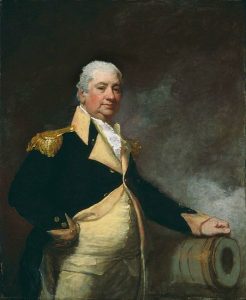 Shays’s Rebellion had an enormous impact on the attitudes of many Americans. By October 1786 the news of Shays’s Rebellion had spread from one end of America to the other, as newspapers were filled with accounts of the events in Massachusetts. Certain men, such as Henry Knox and Henry Lee, also spread the news, and invariably their accounts were alarmist. Knox, the Confederation’s Secretary at War, wrote George Washington on 23 October that taxes were not the true cause of the rebellion. Knox explained that the “creed” of the insurgents was that the property of the United States “ought to be the common property of all” and that the insurgents were determined “to annihilate all debts public and private, and have agrarian laws, which are easily effected by the means of unfunded paper money, which shall be a tender in all cases whatever.” Knox envisaged “a formidable rebellion against reason, the principle of all government, and against the very name of liberty.” He suggested that the government be “braced, changed, or altered to secure our lives and property.”
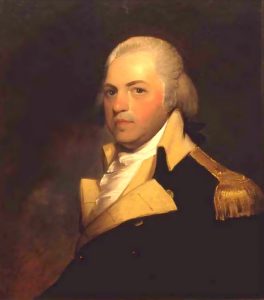 Influenced by Knox, Henry Lee of Virginia, a member of Congress, informed Washington on 17 October 1786 that “a majority of the people of Massachusetts are in opposition to the government, some of their leaders avow the subversion of it to be their object together with the abolition of debts, the division of property and re-union with G. Britain. . . . we are all in dire apprehension that a beginning of anarchy with all its calamitys has approached, and have no means to stop the dreadful work.” Lee wanted Washington to use his influence and intervene in Massachusetts.
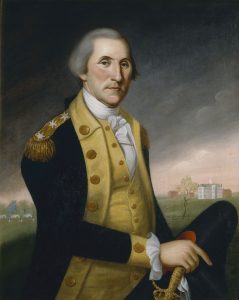 Washington reacted to the news from Massachusetts with deep alarm and grave concern. The news was perhaps proof “that mankind when left to themselves are unfit for their own Government.” To Lee’s suggestion that he might be asked to use his influence, Washington retorted on 31 October that “Influence is no Government. Let us have one by which our lives, liberties and properties will be secured; or let us know the worst at once.” After he received Knox’s letter of 23 October, Washington wrote James Madison on 5 November that “We are fast verging to anarchy and confusion,” and, he asked, “What stronger evidence can be given of the want [i.e., lack] of energy in our governments than these disorders?” On 26 December, Washington thanked Knox for his letter which was more satisfactory than the “vague and contradictory” reports of the newspapers. He believed that only a Tory or a Briton could have predicted the disorders in Massachusetts; they were a complete surprise to him. “When this spirit first dawned,” he continued, “probably it might easily have been checked; but it is scarcely within the reach of human ken, at this moment, to say when, where, or how it will end. There are combustibles in every State, which a spark might set fire to.” Thus, what was to be feared was not Shays himself, but what he represented.
 A widely circulated article in the Albany Gazette on 21 June 1787 declared that men like Shays existed where government was weak. The “rage of excessive democracy” bred them. The writer continued: “Let no one suppose that I am an enemy to freedom—I am a friend to liberty, and to secure it inviolate to the people, would wish to banish licentiousness.—But let them know, that without a sacred regard to the laws—a reverential submission to authority—an impartial and sometimes a severe administration of justice—this invaluable jewel, this boasted liberty will be inevitably lost—For when the laws are vague—when the administration of justice becomes feeble and irregular—when political empirics, ever courting popularity, give to a distempered multitude whatever their depraved appetites may crave—when the people are wallowing in the superfluity of liberty—then, unless their eyes were darkened, would they see tyranny in his horrid form, brandishing the bloody scourge and entering the door—then, unless they were deafer than adders, would they hear the chain of slavery clanging in their ears.” In time, some newspaper writers identified anyone who resisted authority or opposed the establishment of a strong central government as a Shaysite. After the Constitutional Convention adjourned, Shaysite became a Federalist synonym for an opponent of the Constitution.
By the end of July 1787, Shays himself was no longer considered a threat, and the newspapers—in at least two widely circulated articles—reflected this change. On 26 July the New York Journal stated: “Poor Shays—little is said of him.” He had become a burden to his friends and they have shunned him. “The rebellion dwindles.” On 18 August the Pennsylvania Herald noted that “From the Eastward we understand, that the spirit of Shayism rapidly subsides.”
Shays’s Rebellion and other acts of violence shocked many Americans who already feared that the United States was on the verge of anarchy. Their dismay was heightened by state legislatures which enacted debtor relief or showed leniency toward lawbreakers. Consequently, more and more Americans turned to the idea of a powerful central government—the only kind of government which could restrain the state legislatures and protect life, liberty, and property against the excesses of democracy. In particular, these people looked to the Constitutional Convention to strengthen the Confederation government. The Convention responded by incorporating a variety of restrictions on the states in the newly proposed Constitution.
*Derived from CC:18 in Vol. XIII of The Documentary History of the Ratification of the Constitution.
A widely circulated article in the Albany Gazette on 21 June 1787 declared that men like Shays existed where government was weak. The “rage of excessive democracy” bred them. The writer continued: “Let no one suppose that I am an enemy to freedom—I am a friend to liberty, and to secure it inviolate to the people, would wish to banish licentiousness.—But let them know, that without a sacred regard to the laws—a reverential submission to authority—an impartial and sometimes a severe administration of justice—this invaluable jewel, this boasted liberty will be inevitably lost—For when the laws are vague—when the administration of justice becomes feeble and irregular—when political empirics, ever courting popularity, give to a distempered multitude whatever their depraved appetites may crave—when the people are wallowing in the superfluity of liberty—then, unless their eyes were darkened, would they see tyranny in his horrid form, brandishing the bloody scourge and entering the door—then, unless they were deafer than adders, would they hear the chain of slavery clanging in their ears.” In time, some newspaper writers identified anyone who resisted authority or opposed the establishment of a strong central government as a Shaysite. After the Constitutional Convention adjourned, Shaysite became a Federalist synonym for an opponent of the Constitution.
By the end of July 1787, Shays himself was no longer considered a threat, and the newspapers—in at least two widely circulated articles—reflected this change. On 26 July the New York Journal stated: “Poor Shays—little is said of him.” He had become a burden to his friends and they have shunned him. “The rebellion dwindles.” On 18 August the Pennsylvania Herald noted that “From the Eastward we understand, that the spirit of Shayism rapidly subsides.”
Shays’s Rebellion and other acts of violence shocked many Americans who already feared that the United States was on the verge of anarchy. Their dismay was heightened by state legislatures which enacted debtor relief or showed leniency toward lawbreakers. Consequently, more and more Americans turned to the idea of a powerful central government—the only kind of government which could restrain the state legislatures and protect life, liberty, and property against the excesses of democracy. In particular, these people looked to the Constitutional Convention to strengthen the Confederation government. The Convention responded by incorporating a variety of restrictions on the states in the newly proposed Constitution.
*Derived from CC:18 in Vol. XIII of The Documentary History of the Ratification of the Constitution.
Paper Money example
Shays’s Rebellion
Henry Knox
Henry Lee
George Washington
The Albany Gazette masthead